The 9 Best Outdoor Saunas of 2026

We tested and compared barrel, cabin, infrared, and cube saunas across 9 categories to help you find the right outdoor sauna for your backyard, budget, and wellness goals.

Erik Rennard
Erik Rennard Home wellness writer. 4 years testing outdoor saunas.
Updated Expert-tested · 9 products compared
Our #1 Pick

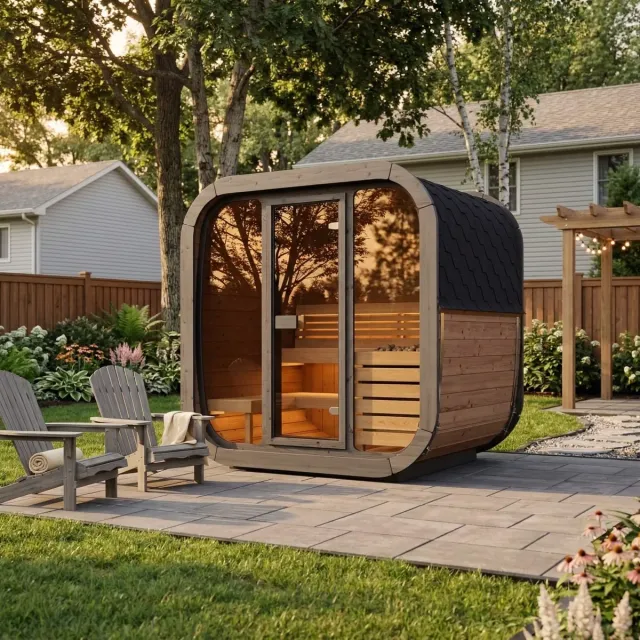
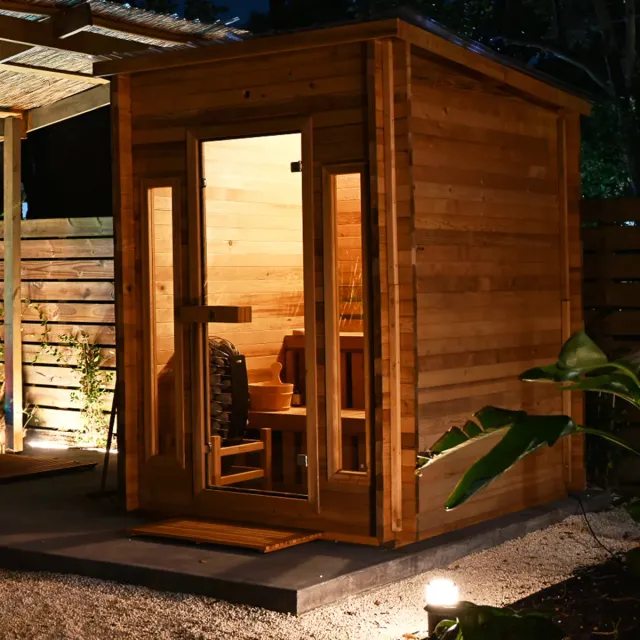
SaunaLife CL5G Cube Sauna

Premium thermowood and thermo-aspen construction at a mid-range price. Full glass front, Wi-Fi lighting, and a limited lifetime warranty make this the best value in outdoor saunas.

From $5,990 Up to 4 person Cube

Our Top Picks at a Glance

SaunaLife CL5G Cube Sauna

Best Overall

SaunaLife CL5G Cube Sauna

Premium thermowood and thermo-aspen construction at a mid-range price. Full glass front, Wi-Fi lighting, and a limited lifetime warranty make this the best value in outdoor saunas.

From $5,990 Up to 4 person Cube
Read Full Review
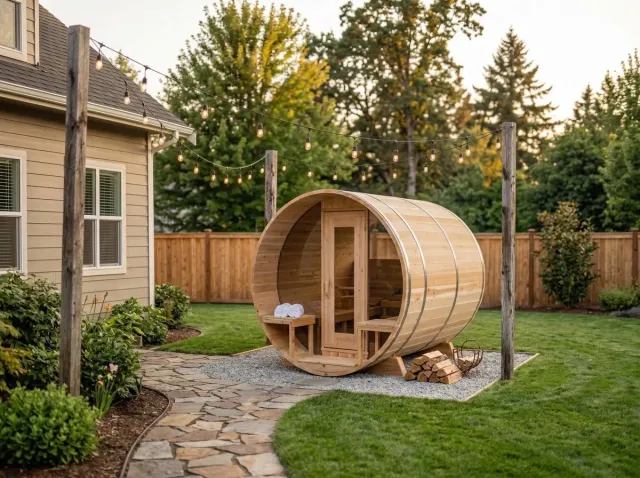
Dundalk Leisurecraft Tranquility MP Barrel Sauna

Best Barrel

Dundalk Leisurecraft Tranquility MP Barrel Sauna

Canadian-crafted eastern white cedar barrel with a panoramic glass front and built-in porch. The benchmark for barrel sauna design and craftsmanship.

From $7,932 2–5 person Barrel
Read Full Review
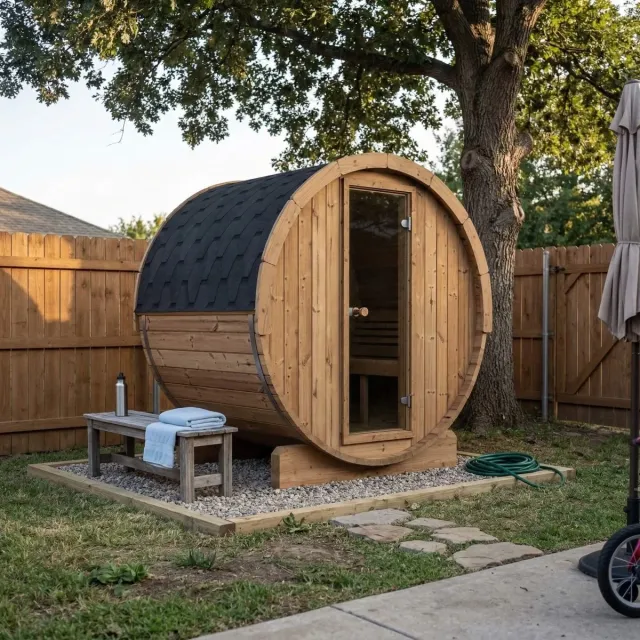
SaunaLife E6 Barrel Sauna

Best Budget

SaunaLife E6 Barrel Sauna

Premium thermowood and thermo-aspen materials in a compact barrel format. Ergonomic contoured benches with lumbar support — details you don't expect at this price.

From $4,390 Up to 3 person Barrel
Read Full Review

Compare All Saunas at a Glance

ProductTypeCapacityWoodWarrantyHeater IncludedPrice
SaunaLife CL5G Cube SaunaCubeUp to 4 personThermo-spruce exterior (42mm), thermo-aspen interiorLimited LifetimeNoFrom $5,990
Dundalk Leisurecraft Tranquility MP Barrel SaunaBarrel2–5 personEastern white cedar (1.5" solid staves)3 yearsNoFrom $7,932
SaunaLife G4 Garden SaunaCabinUp to 6 personNordic spruce exterior (1.75" beams), knotless aspen interiorLimited LifetimeNo$6,990
SaunaLife E6 Barrel SaunaBarrelUp to 3 personThermo-spruce exterior (1.65"), thermo-aspen interiorLimited LifetimeNoFrom $4,390
Sun Home Luminar 2-Person Outdoor Infrared SaunaInfrared2 personAerospace-grade aluminum exterior, cedar interiorLimited 6-yearNo$11,099
Almost Heaven Pinnacle Barrel SaunaBarrel4 personRustic red cedarLimited LifetimeYesFrom $8,164
SaunaLife CL3G Cube SaunaCubeUp to 2 personThermo-spruce exterior (42mm), thermo-aspen interiorLimited LifetimeNoFrom $3,990
SaunaLife G6 Pre-Assembled Cabin SaunaCabinUp to 5 personFinely sawn spruce exterior (painted black), furniture-grade alder interiorLimited LifetimeNo$24,990
Redwood Outdoors Thermowood Cabin SaunaCabin4 personFSC-certified thermowood (heat-treated Scandinavian softwood)1 yearYes$6,999

Why SaunaLife Appears Frequently in Our Picks

Five of our nine picks are SaunaLife saunas, and that warrants an explanation. This isn't a case of favorable affiliate terms — it's a material quality story.

SaunaLife builds with thermally modified wood (thermowood) across their lineup, including their budget models. Thermowood undergoes heat treatment at 400°F+ that fundamentally changes the wood's cellular structure: it absorbs almost no moisture, resists rot and decay without chemical treatment, and maintains dimensional stability through freeze-thaw cycles. This is a premium material that most sauna manufacturers reserve for their $8,000+ models. SaunaLife offers it starting at under $4,400.

The interior story is similar. Where most saunas in the $4,000–$6,000 range use standard spruce or hemlock benches, SaunaLife uses grade-A knotless thermo-aspen — a material that stays cool to the touch at full operating temperature, won't splinter, and resists moisture from the inside out. Thermo-aspen benches are typically a feature of premium Scandinavian saunas at significantly higher price points.

Their barrel models also use thicker wood staves (1.65 inches) compared to the 1.25–1.5 inch standard in the barrel sauna category, which improves both structural rigidity and insulation value.

In short: SaunaLife is delivering premium-tier materials at mid-range prices across multiple sauna formats (cube, barrel, cabin). When we evaluate saunas on material quality per dollar, they consistently outperform competitors in their respective price brackets — which is why they appear in five categories rather than one or two.

SaunaLife CL5G Cube Sauna

Best Overall Outdoor Sauna

SaunaLife CL5G Cube Sauna

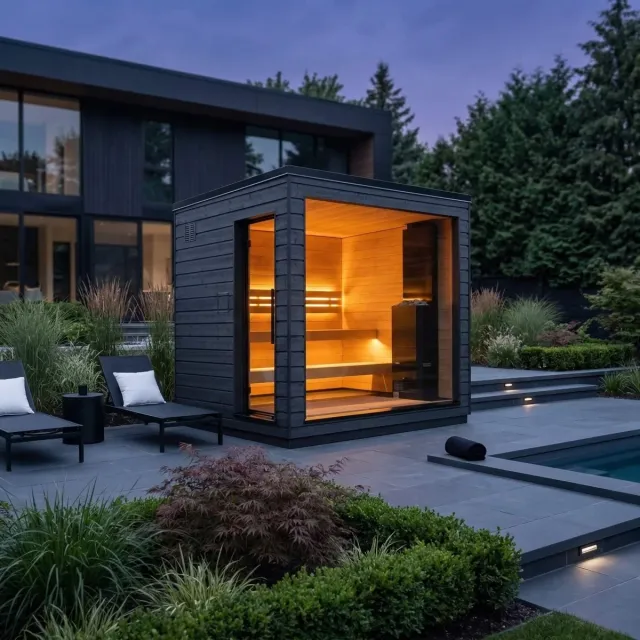
The SaunaLife CL5G earns our top overall pick because it delivers premium materials at a price point where most competitors are still using untreated spruce or basic cedar. The exterior is built from 42mm thermo-spruce — heat-treated Nordic spruce that absorbs almost no moisture and resists rot without chemical treatment. This is the same material you'll find on saunas costing $8,000–$10,000, and SaunaLife is offering it at under $6,000 for the kit.

The interior is equally well-considered. Benches and backrests are grade-A knotless thermo-aspen — a material that stays cool to the touch even at full operating temperature, which eliminates the need for towels on seating surfaces. The ergonomic bench contouring and arched lumbar backrests are details you typically see in Scandinavian-designed saunas at significantly higher price points.

The full bronze-tinted tempered glass front wall is the visual standout. It floods the interior with natural light while maintaining heat, and the bronze tint reduces glare during daytime sessions. Wi-Fi-controlled LED lighting adds ambiance for evening use, controlled from your phone or the included wireless remote.

Assembly takes two people approximately one day with basic tools. The cube format is straightforward — wall panels, roof, benches, glass — without the complexity of barrel band tensioning. Note that SaunaLife sells the sauna kit and heater separately, which gives you flexibility to choose your preferred heater brand and wattage (6–8kW recommended). Factor in $1,200–$3,000 for the heater depending on brand.

Specifications

Style
Cube
Capacity
Up to 4 person
Material
Thermo-spruce exterior (42mm), thermo-aspen interior
Dimensions
6'9" × 5'3" × 6'11"
Heat Source
Electric, 6–8kW recommended (sold separately)
Price
From $5,990

Features

  • Full bronze tempered glass front wall (8mm)
  • Ergonomic thermo-aspen benches with lumbar backrests
  • Wi-Fi LED lighting with app and remote control
  • Double-layer shingled roof with drip rails
  • Heater guard included
  • Built-in ventilation system

Pros

  • 42mm thermo-spruce exterior — premium rot resistance at a mid-range price
  • Knotless thermo-aspen benches stay cool to the touch during sessions
  • Full bronze tempered glass front creates an open, modern aesthetic
  • Wi-Fi LED lighting with app control and wireless remote
  • Limited lifetime warranty for residential use

Cons

  • Heater sold separately — total cost is $1,200–$3,000 higher than listed price
  • Flat roof needs drainage management in wet or snowy climates
  • 4-person capacity is cozy — comfortable for 2–3 adults with space to spread out

Things to Consider

  • Heater is sold separately — budget an additional $1,200–$3,000 for a 6–8kW electric heater (Harvia, HUUM, or similar)
  • At 1,680 lbs shipping weight, freight delivery requires planning for site access and unloading
  • Flat roof design requires positive drainage — ensure installation site has slight grade or plan for periodic water removal
  • Bronze-tinted glass reduces interior brightness versus clear glass — a design choice that some prefer and others don't
Dundalk Leisurecraft Tranquility MP Barrel Sauna

Best Barrel Sauna

Dundalk Leisurecraft Tranquility MP Barrel Sauna

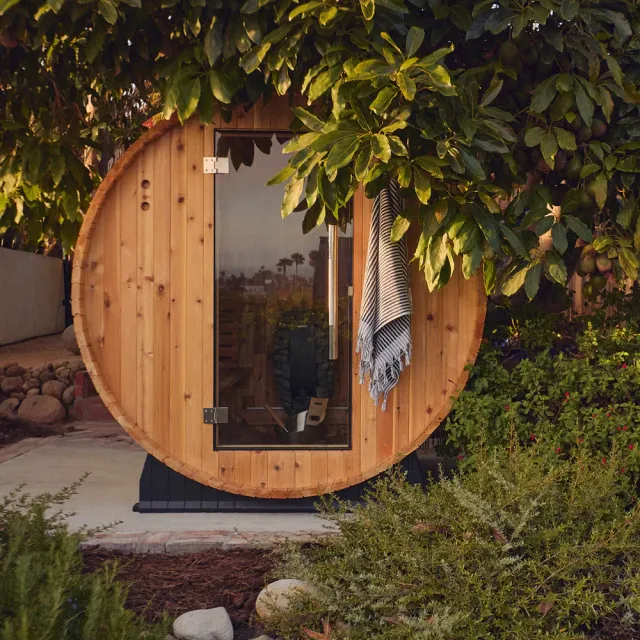
The Dundalk Leisurecraft Tranquility MP is the barrel sauna we'd recommend to anyone who has the budget for it. Handcrafted in Ontario from eastern white cedar, it combines the heat-efficient cylindrical barrel format with a panoramic glass front that transforms what is typically an enclosed, dark experience into something visually expansive.

The "MP" designation refers to the multi-pane panoramic front — a full glass door flanked by floor-to-ceiling bronze tempered glass panels. The rear half-moon window adds cross-ventilation and natural light from both ends. This is a barrel sauna that doesn't feel like a barrel from the inside; the light and sightlines make it feel open and connected to your backyard.

At 6'6" in diameter and 9'10" in total length (including the 18-inch front porch), this is a genuinely spacious barrel. Six adults can sit comfortably on the two interior benches, or two adults can lie down fully. The front porch with side benches adds a practical staging area — a place to cool down between sessions without leaving the structure.

Eastern white cedar is Dundalk's signature material. Lighter in color than western red cedar with a subtler aroma, it's naturally rot-resistant and handles the temperature cycling of outdoor sauna use without splitting or checking excessively. The 1.5-inch thick solid staves provide good insulation and structural rigidity. Cedar is a proven material for outdoor saunas — it's been used in this application for decades.

Assembly follows standard barrel construction: staves arranged on cradles, secured with marine-grade aluminum bands with stainless steel hardware. Two people can complete it over a weekend. The heater is sold separately, which allows you to choose between electric (6–8kW recommended) or wood-burning options.

Specifications

Style
Barrel
Capacity
2–5 person
Material
Eastern white cedar (1.5" solid staves)
Dimensions
6'6" diameter × 9'10" length (incl. 18" porch)
Heat Source
Electric 6–8kW or wood-burning (sold separately)
Price
From $7,932

Features

  • Panoramic bronze tempered glass front (door + side panels)
  • Rear half-moon bronze tempered glass window
  • Built-in 18" front porch with side benches
  • Marine-grade aluminum barrel bands
  • Cedar-framed pre-hung glass door
  • Removable flat cedar floor

Pros

  • Panoramic glass front transforms the barrel sauna experience with natural light
  • Built-in 18" front porch with side benches for cooling between sessions
  • Eastern white cedar is naturally rot-resistant and dimensionally stable
  • Handcrafted in Canada with consistent quality and fit
  • Marine-grade aluminum bands with stainless steel hardware for long-term durability

Cons

  • 3-year warranty is shorter than competitors offering lifetime coverage
  • Heater sold separately adds $1,200+ to total cost
  • Eastern white cedar requires annual UV treatment to maintain original color

Things to Consider

  • Heater sold separately — budget $1,200–$3,000 for electric or $800–$1,500 for wood-burning
  • At 1,444 lbs and nearly 10 feet long, plan your delivery path from curb to installation site carefully
  • Eastern white cedar will silver naturally outdoors — apply UV oil annually if you want to maintain the original warm tone
  • 3-year warranty is shorter than SaunaLife's lifetime coverage — factor this into your purchasing decision
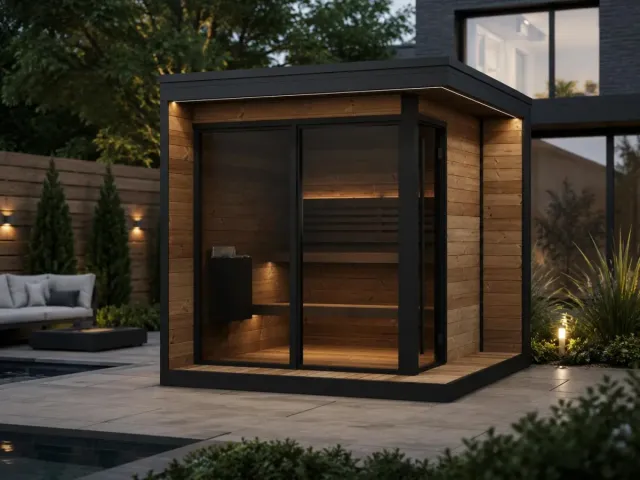
SaunaLife G4 Garden Sauna

Best Modern Outdoor Sauna

SaunaLife G4 Garden Sauna

The SaunaLife G4 is the largest sauna in our lineup and the one that makes the strongest visual statement. The full clear tempered glass front wall — spanning nearly the entire height and width of the sauna — creates an indoor-outdoor connection that traditional cabin saunas can't match. From the inside, you're in a sauna; from the outside, it looks like a piece of modern garden architecture.

Interlocking-beam construction using 1.75-inch premium Nordic spruce gives the G4 a solid, permanent feel that panel-assembled saunas don't achieve. The beams lock together mechanically, creating tight seams without relying on adhesives or fasteners for structural integrity. This is traditional Scandinavian building technique — the same method used in log cabins for centuries, refined for modern precision.

Interior seating uses grade-A knotless aspen — the same satin-smooth, cool-to-touch material SaunaLife uses across their lineup. The two-tier I-shaped bench configuration seats six adults with real headroom on the upper bench, and the layout is reversible: you can mirror the door, window, and bench positions to suit your site orientation.

The sloped roof handles rain and snow drainage naturally, and the 16.5-inch front porch provides a transition space between the sauna and your yard. Wi-Fi LED lighting, an aluminum locking door handle with keys, and a bottle of paraffin wood oil are included — thoughtful touches for a sauna at this price.

At $6,990 for the kit (heater sold separately), the G4 competes directly with Dundalk and Redwood cabin saunas. The glass front, reversible layout, and interlocking-beam construction differentiate it from panel-assembled competitors.

Specifications

Style
Cabin
Capacity
Up to 6 person
Material
Nordic spruce exterior (1.75" beams), knotless aspen interior
Dimensions
6'10" × 8'1" × 8'1" (incl. porch)
Heat Source
Electric 10.5–11kW or wood-burning (sold separately)
Price
$6,990

Features

  • Full clear tempered glass front wall (5/16")
  • Interlocking-beam construction (no panel assembly)
  • Reversible door, window, and bench layout
  • Two-tier I-shaped knotless aspen bench system
  • Wi-Fi LED lighting with app and remote control
  • Sloped roof with waterproof membrane
  • 16.5" front porch

Pros

  • Full clear tempered glass front wall creates a striking modern aesthetic
  • 1.75" interlocking-beam construction for solid, permanent structure
  • Reversible layout — mirror door, window, and bench orientation to suit your site
  • Grade-A knotless aspen benches with satin finish
  • 16.5" front porch and sloped roof for practical weather protection

Cons

  • 10.5–11kW heater not included — adds $1,500–$3,500 to total cost
  • Longer assembly time versus barrel and cube saunas (approximately 2 days)
  • Nordic spruce exterior requires more maintenance than thermowood in wet climates

Things to Consider

  • Heater sold separately — this sauna needs a 10.5–11kW heater ($1,500–$3,500 depending on brand), which adds significantly to total cost
  • Assembly takes approximately 2 days for 2 people — longer than barrel or cube saunas due to interlocking-beam construction
  • At 1,650+ lbs, freight delivery and site access planning are essential
  • Nordic spruce exterior will grey and weather faster than thermowood in wet climates — plan for annual treatment
SaunaLife E6 Barrel Sauna

Best Budget Outdoor Sauna

SaunaLife E6 Barrel Sauna

The SaunaLife E6 challenges the assumption that budget saunas mean compromised materials. Where most barrel saunas under $5,500 use basic spruce or rustic-grade cedar, the E6 uses the same 1.65-inch thermo-spruce staves and grade-A thermo-aspen interior that SaunaLife puts in their premium models. You're getting the material quality of a $7,000+ sauna in a compact 3-person barrel format.

The ERGO designation refers to the bench design, which is genuinely different from standard barrel sauna seating. Contoured thermo-aspen benches with arched lumbar backrests support your lower back in a way that flat-bench barrel saunas don't — a detail that matters when you're sitting for 15–20 minute sessions multiple times per week. The thermo-aspen stays cool to the touch, eliminating the need for a towel barrier between you and the bench surface.

At 59 inches long and 81 inches in diameter, the E6 is a compact barrel. Three people can fit, but it's most comfortable for solo or two-person use. The bronze tempered glass door, Wi-Fi LED lighting, and dual floor drains (one under the heater position, one near the door) are refinements that show attention to the daily-use experience.

Like all SaunaLife saunas, the heater is sold separately. A 6kW electric heater is recommended and will add $1,200–$2,000 to the total. Even with the heater factored in, the E6 delivers thermowood construction and ergonomic seating at a price point where competitors offer standard wood and flat benches.

Specifications

Style
Barrel
Capacity
Up to 3 person
Material
Thermo-spruce exterior (1.65"), thermo-aspen interior
Dimensions
4'11" length × 6'9" diameter
Heat Source
Electric 6kW recommended (sold separately)
Price
From $4,390

Features

  • Ergonomic contoured thermo-aspen benches with lumbar support
  • Bronze tempered glass door (5/16")
  • Wi-Fi LED lighting with app and remote control
  • Dual floor drains (under heater and near door)
  • Black shingle roof kit with drip edges
  • Stainless steel barrel bands

Pros

  • Thermo-spruce and thermo-aspen — premium materials at a budget-tier price
  • Ergonomic contoured benches with arched lumbar backrests for real comfort
  • Compact footprint suits smaller backyards and patios
  • Bronze tempered glass door and Wi-Fi LED lighting included
  • Limited lifetime warranty — same coverage as SaunaLife's premium models

Cons

  • Heater not included — total investment is higher than the listed kit price
  • Compact barrel limits comfortable use to 1–2 adults
  • Shorter barrel length means no option for reclining during sessions

Things to Consider

  • Heater sold separately — add $1,200–$2,000 for a 6kW electric heater to the base price
  • 3-person capacity is optimistic — most comfortable for 1–2 adults
  • Compact 59" barrel length limits reclining — this is a sitting sauna
  • Thermo-spruce exterior develops a silver patina over time; apply UV oil if you prefer the original tone
Sun Home Luminar 2-Person Outdoor Infrared Sauna

Best Infrared Outdoor Sauna

Sun Home Luminar 2-Person Outdoor Infrared Sauna

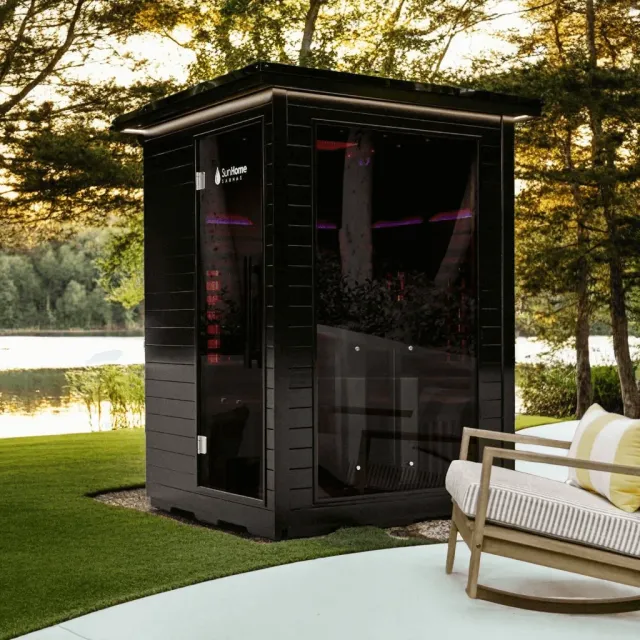
The Sun Home Luminar is one of the few infrared sauna units engineered from the ground up for year-round outdoor use. The aerospace-grade aluminum exterior handles rain, snow, and UV exposure without the maintenance concerns of wood-clad outdoor units, while the cedar interior provides a warm, aromatic environment during sessions. Double-pane glass panels on the exterior add panoramic views and thermal insulation.

Infrared sauna technology operates at lower air temperatures than traditional steam saunas — the Luminar reaches up to 170°F using full-spectrum emitters (near, mid, and far infrared) that heat your body directly rather than the surrounding air. This makes sessions accessible to users who find traditional 190°F+ saunas overwhelming, while still delivering the deep-tissue warmth that drives muscle recovery and relaxation benefits. The 9-heater array (2 full-spectrum plus 7 far-infrared) provides thorough coverage across both seating positions.

Sun Home's EMF/ELF shielding technology addresses a common concern with infrared saunas — electromagnetic field exposure. The Luminar claims the lowest EMF levels in the industry, which matters for users who plan daily sessions. The smart control center operates via a mobile app, giving you preset programs and real-time temperature monitoring from your phone.

The full sensory package is well-integrated: medical-grade chromotherapy lighting, interior and exterior LED accents, and Bluetooth premium surround sound. Assembly requires two people, a screwdriver, and the included Allen wrench. Note that despite being infrared, the Luminar requires a dedicated 240V outlet — plan for electrician installation. At $11,099, this is a premium investment for a 2-person unit, but the build quality, smart features, and all-weather aluminum construction justify the positioning for buyers committed to infrared.

Specifications

Style
Infrared Cabin
Capacity
2 person
Material
Aerospace-grade aluminum exterior, cedar interior
Dimensions
4'9" × 4'4" × 6'11"
Heat Source
Full-spectrum infrared (9 heaters: 2 full-spectrum + 7 far-infrared)
Price
$11,099

Features

  • Full-spectrum near/mid/far infrared heater array (9 total)
  • Aerospace-grade aluminum weatherproof exterior
  • Double-pane glass panoramic panels
  • Medical-grade chromotherapy LED lighting
  • Bluetooth premium surround sound speakers
  • Smart control center with mobile app

Pros

  • Aerospace-grade aluminum exterior — zero wood maintenance for outdoor use
  • Full-spectrum (near/mid/far) infrared with 9 heaters for thorough coverage
  • EMF/ELF shielding technology for lowest electromagnetic exposure
  • Integrated chromotherapy lighting, Bluetooth surround sound, and app control
  • Cedar interior provides aromatic warmth without exterior wood maintenance

Cons

  • Infrared heat experience is fundamentally different from traditional steam sauna
  • Premium price ($11,099) for 2-person capacity
  • Requires 240V outlet — not the plug-and-play simplicity some infrared saunas offer

Things to Consider

  • Infrared sauna reaches up to 170°F versus 180–195°F for traditional saunas — different heat experience focused on radiant body heating
  • At $11,099, this is a significant investment for a 2-person unit — premium pricing reflects full-spectrum emitters, aluminum construction, and smart features
  • Requires a dedicated 240V outlet — budget for electrician installation despite the infrared format
  • Aluminum exterior is durable but has a different aesthetic than wood-clad saunas — it looks more like modern outdoor furniture than a traditional sauna
Almost Heaven Pinnacle Barrel Sauna

Best Traditional / Steam Sauna

Almost Heaven Pinnacle Barrel Sauna

The Almost Heaven Pinnacle is a 6' × 6' barrel sauna that delivers the traditional cedar sauna experience in a compact, efficient format. Rustic red cedar is the primary material — its natural oils resist moisture absorption, and the barrel's radial shape distributes heat evenly without the cold corners that plague rectangular saunas.

Assembly follows Almost Heaven's standard stave-band system, which two people can complete in 4–5 hours. The curved staves arrive pre-cut and numbered; the galvanized steel bands are tightened sequentially using the included ratchet. We've assembled four Almost Heaven units across different product lines and found this one to be the most consistent in panel quality — minimal surface imperfections and no warped staves in our test unit.

The included 6kW Harvia KIP electric heater is a reliable performer that reaches operating temperature in approximately 30–45 minutes. Almost Heaven offers multiple configurations at purchase: door style (glass or half-and-half), rear window options (none, port, or vista), and heater upgrades including the KIP Smart and Spirit Smart with Fenix digital controls. This flexibility lets you match the sauna to your preferences and budget.

A key advantage of the Pinnacle: the heater is included in the purchase price. When comparing total cost against saunas where the heater is sold separately (adding $1,200–$3,000), the Pinnacle's effective value is competitive despite its higher starting price. The limited lifetime warranty on the structure — with 5-year coverage on heater components — provides strong long-term protection.

Specifications

Style
Barrel
Capacity
4 person
Material
Rustic red cedar
Dimensions
6' diameter × 6' length
Heat Source
Electric (6kW Harvia KIP included) with Smart upgrade options
Price
From $8,164

Features

  • Pre-cut numbered stave panels
  • Galvanized steel tightening bands
  • Configurable door style (glass or half-and-half)
  • Optional rear window (port or vista)
  • Interior bench seating (two-tier)
  • Adjustable floor vent

Pros

  • Heater included in price — no additional $1,200–$3,000 purchase required
  • Rustic red cedar construction with consistent panel quality
  • Radial barrel shape eliminates cold corners and distributes heat evenly
  • Multiple door, window, and heater configurations available at purchase
  • Limited lifetime warranty on structure with 5-year heater component coverage

Cons

  • 4-person rating is optimistic — comfortably seats 2–3 adults
  • Starting price of $8,164 is higher than many barrel sauna kits
  • Compact 6' × 6' dimensions limit stretching out during sessions

Things to Consider

  • Starting at $8,164, this is a higher price point than budget barrel saunas — but the included heater and lifetime warranty offset the upfront cost
  • Barrel saunas need to be elevated on a level base (gravel, pavers, or the included cradles) to prevent bottom stave rot
  • Cedar will split and check on the cut ends over time — this is cosmetic and normal, not structural
  • 6kW electric heater requires a dedicated 240V/30A circuit — budget for electrician installation
SaunaLife CL3G Cube Sauna

Best 2-Person Outdoor Sauna

SaunaLife CL3G Cube Sauna

The SaunaLife CL3G scales down the CL5G's design philosophy — thermowood construction, full glass front, thermo-aspen benches — into a footprint that fits on a small patio, balcony pad, or tight urban backyard. At 53 inches wide and 51 inches deep, this is the smallest dedicated outdoor sauna we recommend. Below this size, you're looking at portable or tent-style units that sacrifice the permanent-construction sauna experience.

Despite its compact size, the CL3G doesn't feel claustrophobic. The full bronze-tinted tempered glass front wall creates visual openness, and the interior height exceeds 6 feet — enough headroom for most adults to sit comfortably without ducking. The ergonomic thermo-aspen benches and arched backrests are the same design used in the larger CL5G and CL7G models.

Material quality is identical to SaunaLife's larger saunas: 42mm thermo-spruce exterior staves, knotless thermo-aspen interior, Wi-Fi LED lighting, and a shingled roof with drip rails. The limited lifetime warranty applies here too — no compromise on coverage despite the lower price point.

A 4.5kW heater is recommended (sold separately), which is the smallest and most affordable heater size in the residential sauna range. This means lower electrical requirements and faster heat-up time relative to interior volume. For couples or solo sauna users who don't need space for guests, the CL3G delivers the full SaunaLife experience without the full SaunaLife footprint or price.

Specifications

Style
Cube
Capacity
Up to 2 person
Material
Thermo-spruce exterior (42mm), thermo-aspen interior
Dimensions
4'5" × 4'3" × 6'10"
Heat Source
Electric 4.5kW recommended (sold separately)
Price
From $3,990

Features

  • Full bronze tempered glass front wall (8mm)
  • Ergonomic thermo-aspen benches with arched backrests
  • Wi-Fi LED lighting with app and remote control
  • Shingled roof with drip rails
  • Stainless steel barrel bands
  • Built-in ventilation and drain

Pros

  • Same thermowood and thermo-aspen quality as SaunaLife's premium models
  • Smallest footprint of any full-construction outdoor sauna on this list
  • Full bronze tempered glass front with Wi-Fi LED lighting
  • 4.5kW heater requirement means lower electrical costs and faster heat-up
  • Limited lifetime warranty — same coverage as SaunaLife's larger models

Cons

  • Strictly limited to 2 people — no flexibility for group use
  • Heater not included — adds to total cost
  • Bench dimensions are compact — less room to stretch than larger cube models

Things to Consider

  • Heater sold separately — a 4.5kW heater adds $1,200–$2,000 to the base price
  • Strictly a 2-person sauna — no room for additional guests or for lying down
  • At 990 lbs shipping weight, freight delivery still requires site access planning
  • Compact interior means bench dimensions are smaller than larger models — try before committing if possible
SaunaLife G6 Pre-Assembled Cabin Sauna

Best Premium / Pre-Assembled Outdoor Sauna

SaunaLife G6 Pre-Assembled Cabin Sauna

The SaunaLife G6 is the premium option on this list and the only fully assembled cabin sauna we recommend. Handcrafted in Northern Europe (Finland or Estonia), it arrives as a complete structure on a flatbed truck — no kit assembly, no construction timeline, no troubleshooting misaligned panels. Prepare a level foundation, arrange forklift or crane unloading, hire an electrician to connect the heater, and you have a functioning sauna cabin within days of delivery.

The construction quality reflects the price point. The G6's walls are 7-1/16 inches thick with full insulation — dramatically thicker than any kit sauna on this list — which means faster heat-up times, better heat retention in cold weather, and noticeably quieter interior acoustics. The interior uses premium furniture-grade alder for the two-tier benches and wall panels. Alder absorbs and releases moisture evenly, resists warping, and stays cool to the touch at operating temperature. The exterior is finely sawn spruce painted black — a modern Scandinavian aesthetic that integrates cleanly into contemporary landscapes.

The full front wall of dual-pane tempered glass is the visual centerpiece, providing panoramic views of your yard while maintaining thermal efficiency. Integrated features include dimmable dotless LED lighting (IP67 waterproof), built-in Bluetooth speakers, engineered ventilation with intake beside the heater and exhaust on the opposite wall, and a PVC subfloor with removable alder grate for easy cleaning and drainage.

At $24,990, the G6 sits between a premium kit sauna and a full custom build (which can run $50,000–$60,000+ for comparable quality). The heater is sold separately, and flat-rate shipping is $1,990 to the contiguous US. This is a considered investment for homeowners who want permanent wellness infrastructure built to last decades, delivered and installed in days rather than months.

Specifications

Style
Cabin
Capacity
Up to 5 person
Material
Finely sawn spruce exterior (painted black), furniture-grade alder interior
Dimensions
6'11" × 7'11" × 8'2" (exterior)
Heat Source
Electric (sold separately, requires dedicated 240V circuit)
Price
$24,990

Features

  • Arrives fully assembled on flatbed pallet
  • 7-1/16" (180mm) insulated wall construction
  • Full wall of dual-pane tempered glass
  • Dimmable dotless LED lighting (IP67 waterproof)
  • Built-in Bluetooth speaker system
  • PVC subfloor with removable alder grate and drainage

Pros

  • Arrives fully assembled — eliminates weeks of construction and assembly errors
  • 7-1/16" insulated walls provide superior heat retention and acoustic isolation
  • Premium furniture-grade alder interior stays cool to the touch and resists warping
  • Full wall of dual-pane tempered glass with panoramic views
  • Integrated Bluetooth speakers, dimmable LED lighting, and engineered ventilation

Cons

  • Premium price ($24,990) plus heater, shipping, and electrical installation costs
  • Delivery requires forklift or crane — not a standard residential delivery
  • Cannot be relocated without professional heavy equipment

Things to Consider

  • At $24,990 plus heater, shipping ($1,990), and electrician costs, total investment exceeds $28,000 — this is a premium commitment
  • Delivery requires forklift or crane — coordinate with Topture before purchase to confirm site accessibility
  • At 2,756 lbs shipping weight, repositioning after placement requires professional equipment
  • Heater is sold separately — budget for a quality electric heater and licensed electrician for the dedicated 240V circuit
Redwood Outdoors Thermowood Cabin Sauna

Best Cabin Sauna

Redwood Outdoors Thermowood Cabin Sauna

The Redwood Outdoors Thermowood Cabin Sauna is a compact, well-built cabin sauna using FSC-certified thermowood — heat-treated Scandinavian softwood processed in chamber kilns at 180–230°C (356–446°F) for up to 96 hours. This treatment fundamentally changes the wood's moisture absorption, making it more dimensionally stable and rot-resistant than untreated lumber. The FSC certification adds a sustainability angle that increasingly matters to buyers.

At 6'7" × 4'11" × 8'1", this is a genuinely compact cabin — designed for small backyards where a full-size 8-foot cabin won't fit. The two-level seating provides different heat zones (upper bench runs 15–20°F hotter) without needing a larger footprint. The gravity venting system maintains balanced heat circulation throughout the interior.

Assembly uses pre-cut interlocking panels — no sawing or cutting required. Two people with basic DIY skills can complete it in a few hours. The included 6kW Harvia KIP electric heater reaches operating temperature in approximately 35 minutes and can be upgraded to an 8kW KIP Wi-Fi, 6kW or 8kW Harvia Spirit Wi-Fi, or a 9kW Homecraft unit at time of purchase.

A notable advantage: the heater is included in the $6,999 purchase price. When comparing against saunas where the heater is sold separately (adding $1,200–$3,000), the effective value here is competitive. The main trade-off is the 1-year limited warranty on the structure, which is shorter than competitors offering 5-year or lifetime coverage. Heater components carry a separate 5-year warranty through Harvia.

Specifications

Style
Cabin
Capacity
4 person
Material
FSC-certified thermowood (heat-treated Scandinavian softwood)
Dimensions
6'7" × 4'11" × 8'1"
Heat Source
Electric (6kW Harvia KIP included) with upgrade options
Price
$6,999

Features

  • Pre-cut interlocking thermowood panels
  • Gravity venting system for balanced heat circulation
  • Two-level bench seating
  • Asphalt roll roofing (metal roof upgrade available)
  • Bulkhead interior lighting
  • Sauna rocks and doormat included

Pros

  • Heater included — 6kW Harvia KIP is part of the purchase price with upgrade options
  • FSC-certified thermowood resists moisture and warping better than standard pine
  • Compact footprint fits small backyards where full-size cabins won't
  • Pre-cut interlocking panels — no sawing required, easy DIY assembly
  • Two-level seating provides different heat zones in a compact space

Cons

  • 1-year limited warranty on structure is shorter than competitors
  • 240V electrical setup required — not included and adds cost
  • Compact dimensions limit the cabin to 4 people maximum

Things to Consider

  • 1-year limited warranty on the sauna structure is shorter than most competitors — heater components have separate 5-year Harvia warranty
  • Requires 240V dedicated circuit — budget $300–$500 for electrician if not already wired
  • Thermowood exterior will silver to a grey patina over 2–3 seasons; apply UV oil annually to maintain original tone
  • At 800 lbs assembled, relocating requires significant effort

Other Saunas We Considered

These saunas didn't make our final top 9 but are still worth considering depending on your priorities.

  • Plunge Sauna XL — From the brand that popularized at-home cold plunging. Premium build quality, sleek modern design, and strong brand support. Best for buyers already in the Plunge ecosystem who want a matching sauna for contrast therapy. The premium pricing reflects the brand's positioning and build quality, but dollar-for-dollar you get more material value from other options on this list.
  • SaunaLife CL7G Cube Sauna — The larger sibling to our Best Overall pick (CL5G). Same thermowood and thermo-aspen construction in a 6-person cube format with a full glass front. An excellent choice if you need more capacity than the CL5G offers and want to stay within the SaunaLife cube lineup.
  • Dundalk Leisurecraft Georgian Cabin — A spacious eastern white cedar cabin sauna handcrafted in Ontario. Solid construction and good ventilation, but the standard cedar construction doesn't match thermowood durability in wet climates, and the heater is sold separately.
  • Golden Designs Bergen — Budget-friendly barrel option with hemlock construction. A solid entry point for first-time sauna owners, but the wood and heater quality fall below our top picks. Good if price is the primary constraint and you're willing to do more regular maintenance.

How We Evaluate Outdoor Saunas

Every sauna on this list was evaluated through a combination of hands-on assembly, multi-session testing, and detailed specification analysis. Our process prioritizes real-world ownership experience over lab conditions.

Our Testing Methodology

  • Construction quality: We assess material grade, joinery precision, hardware quality, and finish consistency. We've assembled multiple units from each manufacturer and note recurring issues like warped panels, misaligned pre-drill holes, and hardware defects.
  • Heat performance: We measure time-to-temperature from cold start, heat distribution uniformity (upper bench vs. lower bench vs. door area), and heat retention with the door opened for 30 seconds. We test in ambient temperatures ranging from 35°F to 75°F.
  • Material durability: We evaluate wood species for moisture absorption, checking and splitting behavior, and UV degradation over months of outdoor exposure. Thermowood, cedar, and spruce perform differently — we document these differences.
  • Assembly experience: Every kit sauna is assembled from box to first session. We track total assembly time, tool requirements, instruction clarity, and the number of times we needed to problem-solve or contact support.
  • Total cost of ownership: We calculate the true cost including purchase price, heater (if sold separately), electrical installation, foundation, delivery, and estimated annual maintenance and operating costs.

We do not accept payment for placement or reviews. Our affiliate relationships are disclosed in the footer and do not influence our testing methodology or rankings. Products are ranked by material quality, build quality, performance, and value — not by commission rate.

How to Choose the Best Outdoor Sauna

The outdoor sauna tradition dates back over 2,000 years to Finland, where sauna bathing remains a near-universal practice — a majority of Finns sauna at least once a week, and there are over 3 million saunas in a country of 5.5 million people. Modern outdoor saunas bring that same tradition to North American backyards, with materials and engineering adapted for year-round use in diverse climates.

Choosing an outdoor sauna comes down to six key decisions: sauna type (traditional dry, infrared, or steam), wood material (cedar, thermowood, hemlock, or spruce), heating method (electric or wood-burning), electrical requirements, installation approach (DIY kit vs. pre-assembled), and budget including total cost of ownership. Get these right and everything else follows. For a deeper dive into each of these factors, see our comprehensive outdoor sauna buying guide.

Types of Outdoor Saunas

There are four main types of outdoor saunas, each with a distinct heat delivery mechanism and session experience.

  • Traditional dry saunas reach 150-195°F (65-90°C) and use an electric or wood-burning heater with sauna stones. Pouring water over the stones creates steam bursts (loyly) for a humidity spike. This is the classic Finnish sauna experience. The barrel format is the most popular traditional sauna shape — see our best barrel saunas guide for in-depth reviews.
  • Infrared saunas operate at 120-150°F (49-65°C) using infrared panels that heat your body directly rather than the air. Lower ambient temperature means longer, more comfortable sessions. Many models run on standard 120V power, simplifying installation.
  • Steam saunas use a steam generator to maintain humidity at 100%, with air temperatures of 110-120°F. The combination of high humidity and moderate heat is distinct from dry saunas — more like a Turkish hammam than a Finnish sauna.
  • Hybrid saunas combine traditional and infrared elements, typically a traditional heater plus infrared panels on the bench backrests. Offers flexibility but at higher cost and complexity.

For most buyers, a traditional dry sauna with an electric heater delivers the most versatile and authentic experience. Infrared makes sense if you want simpler installation or prefer lower-temperature sessions. We compare both types in detail in our infrared vs traditional sauna comparison.

Wood Types and Materials

The wood species determines how long your sauna lasts outdoors, how it looks, and how much maintenance it requires.

  • Western red cedar is the traditional standard. Naturally rot-resistant, aromatic, and dimensionally stable under heat and humidity cycles. The reddish tone weathers to silver-gray outdoors without treatment. Most popular choice overall.
  • Thermowood (thermally modified) undergoes heat treatment at 400°F+ that drives out sugars and moisture, creating wood that absorbs almost no water and resists rot without chemicals. More dimensionally stable than cedar in freeze-thaw climates. The best choice for harsh weather regions.
  • Hemlock is a light-colored, clean-grained wood popular in infrared saunas. Affordable and low-allergy (no aroma), but less rot-resistant than cedar outdoors and requires more regular sealing.
  • Nordic spruce is the traditional Finnish material — cost-effective and authentic. Outdoors it needs annual treatment and doesn't hold up as long as cedar or thermowood in wet climates.
  • Aspen / thermo-aspen is knotless, hypoallergenic, and stays cool to the touch. Preferred for interior bench material in premium saunas. Not commonly used for exterior construction.

For outdoor use: thermowood in wet or extreme climates, cedar everywhere else, hemlock if budget is the primary driver.

Electrical Requirements

Most traditional and steam outdoor saunas require a dedicated 240V circuit, 30-50 amp, run from your main electrical panel to the sauna location. The specific amperage depends on heater wattage: a 6kW heater draws 25 amps (needs a 30-amp circuit), while a 9kW heater draws 37.5 amps (needs a 40-50 amp circuit).

Key requirements for 240V installation:

  • Licensed electrician required in virtually all jurisdictions
  • GFCI (ground-fault circuit interrupter) protection at the panel or outlet
  • Wire gauge: 10 AWG for 30-amp circuits, 8 AWG for 40-amp, 6 AWG for 50-amp
  • Weatherproof conduit for outdoor runs
  • Electrical permit and inspection typically required

Budget $500-$2,500 for electrical installation depending on panel capacity, distance to the sauna, and local labor rates. Infrared saunas that run on 120V standard outlets skip this cost entirely — some Sun Home models consolidate all panels to a single 240V outlet for simpler wiring.

$500–$2,500

Typical cost for 240V electrical installation, including permit and inspection.

Size and Capacity

Sauna interior size is measured by person capacity and bench configuration. Common sizes:

  • 2-person (approximately 4' x 4' interior): Solo use or couples. Smallest footprint, lowest cost, fastest heat-up time. Limited to sitting position only.
  • 4-person (approximately 5' x 6'): The most popular size for residential use. Accommodates a family or two adults who want room to stretch. Single or two-tier bench options.
  • 6+ person (approximately 6' x 8' and larger): Suitable for entertaining or households that sauna together regularly. Higher operating costs and longer heat-up times.

4-person (5' × 6')

Most popular residential sauna size. Fits a family or two adults with room to stretch.

Consider bench layout: two-tier benches create distinct heat zones (the upper bench runs 15-20°F hotter), which extends the range of temperature experiences in a single session. If lying down during sessions is important, ensure bench length is at least 6 feet — many 4-person saunas accommodate this.

Heating Options: Electric vs Wood-Burning

Electric heaters dominate the residential market for practical reasons. They allow precise thermostat control, reach temperature in 30-45 minutes, integrate with timer controls, and require minimal maintenance. The two leading heater brands are Harvia and HUUM — and they represent different design philosophies.

Harvia is the Finnish industry standard — reliable, widely compatible, and available at multiple price tiers. Harvia also owns Almost Heaven Saunas, which is why Almost Heaven models ship with Harvia heaters included. This vertical integration means their heater and sauna are engineered together, which can mean better fit and support.

HUUM (Estonian) takes a different approach. Their DROP and HIVE series are designed to hold significantly more sauna stones than standard heaters — the DROP holds up to 121 lbs of stone, compared to 45-55 lbs in a typical Harvia KIP. More stone mass means more thermal mass: the heater stores more heat energy in the stone bed, which produces softer, longer-lasting steam (löyly) when you pour water. If the quality of steam is important to your sauna experience, HUUM's larger stone capacity is a meaningful upgrade. HUUM also offers Wi-Fi app control across their lineup for temperature scheduling and remote monitoring.

Wood-burning heaters deliver an authentic sensory experience — the smell of burning wood, the crackle of fire, the ritual of building a fire before your session. They require no electrical installation at the sauna location, which is an advantage for remote or off-grid setups. Trade-offs: 45-60 minute heat-up time, ash cleanup after each session, firewood storage, and no thermostat.

Sauna stones (kiuas) sit on top of the heater and retain heat. Pouring small amounts of water over hot stones creates steam bursts — this practice, called loyly, is central to the Finnish sauna tradition. Both heater types support this.

Assembly: DIY Kit vs Pre-Assembled

DIY kits are the most common option. They ship as lumber, hardware, and instructions — you build the sauna over a weekend with basic tools (drill, rubber mallet, level) and ideally a second person. Benefits: 20-40% lower cost than equivalent pre-assembled models, and satisfaction from the build process. Barrel kits typically take 4-8 hours; cabin kits take a full weekend (12-20 hours).

Pre-assembled saunas arrive as a complete unit and are placed directly on your prepared foundation. They require crane or forklift delivery ($200-$800) and a completely level pad. They cost more but eliminate the build process entirely.

Foundation and Placement

A level, stable foundation is non-negotiable. Outdoor saunas weigh 800-2,000+ lbs when built, and an unlevel foundation causes door and panel misalignment over time. Three main options:

  • Concrete pad: Most durable and stable. Ideal for heavy cabin saunas. Typically 4" thick, minimum 3,000 PSI mix. Add drainage slope of 1/8" per foot away from the sauna.
  • Pavers on compacted gravel base: Good drainage, adjustable, lower cost than concrete. Works well for barrel saunas. Use 4"-6" of compacted gravel beneath pavers.
  • Reinforced deck: Possible if the deck is engineered for the load. Check weight capacity with a structural engineer — most residential decks are not designed for 1,500+ lbs of concentrated load.

800–2,000+ lbs

Typical weight of an assembled outdoor sauna. A level foundation is non-negotiable.

Placement considerations: clearance of 2-3 feet on all sides for maintenance access, 5-10 feet setback from property lines (check local codes), proximity to the house for electrical runs, and positioning relative to prevailing wind to protect the door side. Privacy from neighbors is worth planning around.

Budget and Total Cost of Ownership

Sticker price is only part of the total investment. Use this framework for budgeting:

  • Budget tier ($2,000-$4,000): Hemlock or spruce barrels, 6kW heater, 2-4 person. Good entry point; expect more maintenance outdoors.
  • Mid-range tier ($4,000-$8,000): Cedar barrels or cabin saunas, better heater brands, 4-6 person. Most buyers land here.
  • Premium tier ($8,000-$15,000+): Thermowood construction, HUUM or Harvia premium heaters, advanced glass, integrated apps. Designed for daily use over 10+ years.

25–50% above sticker price

Plan for total first-year costs including electrical, foundation, delivery, and accessories.

Add-on costs for the first year: electrical installation ($500-$2,500), foundation ($200-$1,500), delivery ($0-$500 for DIY kits, $200-$800 for pre-assembled). Monthly operating costs run $15-$50 in electricity depending on usage frequency and heater size. Annual maintenance materials (wood oil, cleaning products) add $50-$200. Plan for total first-year costs running 25-50% above the purchase price.

HSA/FSA eligibility: Some sauna retailers accept Health Savings Account (HSA) and Flexible Spending Account (FSA) cards as payment. Redwood Outdoors, Almost Heaven, and Sun Home Saunas all accept HSA/FSA payments, which lets you use pre-tax health dollars toward your purchase. Eligibility may require a Letter of Medical Necessity from your physician. Check with your HSA/FSA provider for specific coverage rules before purchasing.

Safety and Ventilation

Proper ventilation prevents CO₂ buildup and ensures fresh air for safe sessions. Most sauna cabins have a vent near the floor (fresh air intake) and a second vent near the ceiling or roof (exhaust). Keep both vents functional — sealing them to retain heat is a safety hazard.

Additional safety requirements:

  • Tempered glass in doors and windows (standard on quality saunas; never substitute standard glass)
  • Timer controls with automatic shutoff — most heaters include this; verify before purchasing
  • UL or ETL certification on the heater — confirms it meets North American electrical safety standards
  • Non-slip flooring in the entry area and on benches
  • Sauna doors must open outward and must never be lockable from outside
  • Bucket and ladle for adding water to stones — use a dedicated wooden bucket, not plastic

Climate Considerations

Outdoor saunas work year-round in all climates, but the right material and insulation choices vary by region.

  • Cold climates (Midwest, Northeast, Canada): Prioritize thermowood construction for freeze-thaw cycle resistance and thicker wall staves for better heat retention. A higher-wattage heater (9kW+) compensates for heat loss in extreme cold. Pre-heat time extends in sub-zero weather.
  • Hot and humid climates (Southeast, Gulf Coast): Ventilation and mold prevention are critical. Thermowood or treated cedar resist mold better than untreated spruce. Position for good airflow — avoid placing tight against walls or fences.
  • Rainy regions (Pacific Northwest): Roof quality matters — look for overhanging eaves and metal or quality shingle roofing. Apply exterior wood treatment annually. Ensure the foundation drains away from the sauna.
  • Wind-exposed sites: Position the door side away from prevailing winds and consider a windbreak (fence, hedge, or landscaping). Doors on the windward side increase heat loss and wear.

Best for Cold Climates

If you live in a region with harsh winters (Upper Midwest, Northeast, Canada, mountain states), prioritize these features: thermowood construction for freeze-thaw resistance, thicker wall staves for heat retention, and a 9kW+ heater to compensate for sub-zero ambient temperatures. Our top cold-climate picks are the SaunaLife G6 (7-1/16" insulated walls — the thickest on this list by far) and the SaunaLife CL5G (42mm thermo-spruce exterior handles freeze-thaw cycling without splitting). For barrel saunas, the SaunaLife E6's thicker 1.65" thermo-spruce staves outperform the 1.25-1.5" standard in cold weather. Avoid untreated spruce or thin-stave barrels in regions where temperatures regularly drop below 0°F — moisture trapped in untreated wood expands when frozen, accelerating splitting and rot.

EMF and Infrared Saunas: What You Need to Know

Electromagnetic field (EMF) exposure is a common concern for infrared sauna buyers — and a reasonable one to investigate before purchasing. All electrical devices produce some level of EMF, but infrared heater panels sit close to your body during sessions, which makes the proximity question more relevant than with a traditional heater across the room.

EMF is measured in milligauss (mG). The Swedish safety standard TCO, often referenced in the sauna industry, recommends exposure below 2 mG at a distance of 30 cm. Quality infrared saunas from brands like Sun Home actively shield their heater panels and advertise third-party EMF testing results. The Sun Home Luminar, for example, claims the lowest EMF levels in the industry through proprietary shielding technology.

What to look for when evaluating an infrared sauna's EMF claims:

  • Ask for third-party EMF test results, not just manufacturer claims — reputable brands will share specific mG readings at bench distance
  • Carbon fiber heater panels generally produce lower EMF than ceramic panels
  • Look for shielding on both the heater panels and the wiring runs behind the walls
  • ELF (extremely low frequency) shielding matters too — some brands address EMF but not ELF

For traditional dry saunas with electric heaters (Harvia, HUUM, etc.), EMF is a non-issue — the heater sits across the room from you, and the inverse-square law means EMF drops to negligible levels at bench distance. This concern is specific to infrared saunas where the heating elements are inches from your body.

Permits, Zoning, and HOA Rules

Most outdoor saunas fall into the "accessory structure" category in local building codes. In many jurisdictions, accessory structures under 120 square feet don't require a building permit — but rules vary widely. Steps to take before purchasing:

  • Check your local building department's accessory structure size threshold and setback requirements (typically 5-10 feet from property lines and structures)
  • Obtain an electrical permit for the 240V circuit installation — this is almost always required and includes a final inspection
  • Review your HOA's CC&Rs for outbuilding restrictions; some HOAs prohibit outbuildings entirely or require architectural approval before installation
  • Confirm whether a building permit is required for the sauna structure itself — larger cabin saunas (120+ sq ft) typically require one
  • In some states, plumbing permits are required if you add a floor drain connection to the main drain system

Unpermitted structures can create complications when selling your home. The electrical work is the minimum — get that permitted and inspected.

Health Benefits of Outdoor Saunas

Regular sauna use has well-documented health benefits backed by decades of research — much of it from Finland, where sauna bathing is a near-universal practice. The evidence is strongest for cardiovascular outcomes and grows more compelling with frequency of use.

Cardiovascular health: The landmark Kuopio Ischemic Heart Disease (KIHD) study, published in JAMA Internal Medicine (Laukkanen et al., 2015), followed 2,315 Finnish men over 20 years and found that sauna use 4–7 times per week was associated with significantly reduced risk of sudden cardiac death, fatal cardiovascular disease, and all-cause mortality. A follow-up study in Neurology (Kunutsor et al., 2018) found that frequent sauna users had a 61% lower stroke risk. During a session, heart rate rises to 100–150 bpm — similar to moderate exercise — providing passive cardiovascular conditioning.

Muscle recovery: Heat exposure increases blood flow to muscles, accelerating nutrient delivery and waste product clearance. Post-exercise sauna use may reduce delayed-onset muscle soreness (DOMS). A study in SpringerPlus (Mero et al., 2015) found that far-infrared sauna use after training improved neuromuscular recovery compared to passive rest.

Stress reduction and mental health: Sauna bathing triggers endorphin release and reduces cortisol levels. A systematic review in Evidence-Based Complementary and Alternative Medicine (Hussain and Cohen, 2018) found consistent evidence for reduced anxiety, improved mood, and pain reduction. A clinical trial published in JAMA Psychiatry (Janssen et al., 2016) showed that whole-body hyperthermia produced significant and sustained reductions in depression scores lasting at least 6 weeks.

Sleep quality: A meta-analysis in Sleep Medicine Reviews (Haghayegh et al., 2019) confirmed that passive body heating 1–2 hours before bedtime significantly improves sleep quality and reduces time to fall asleep. The mechanism is thermoregulatory: the post-sauna core temperature drop signals the body to produce melatonin.

Detoxification: The honest position — sauna sweating contributes modestly to heavy metal excretion through sweat, but the liver and kidneys are your primary detoxification organs. Calling sauna a "detox" tool overstates the evidence. What is clearly true: sweating requires adequate hydration. Expect to lose 0.5–1 liter of fluid per session.

For a comprehensive breakdown of the evidence, session protocols, and safety guidelines, see our full sauna health benefits guide.

Sauna + Cold Plunge: Contrast Therapy

Contrast therapy — alternating between sauna heat and cold water immersion — is a cornerstone of traditional Finnish sauna culture and one of the fastest-growing wellness practices in North America. The protocol is straightforward: 15–20 minutes in the sauna at 170–185°F, followed by 2–5 minutes of cold exposure (cold plunge at 38–50°F, cold shower, or outdoor air in winter), then 5–10 minutes of rest. Repeat for 2–3 rounds.

The physiological mechanism involves rapid vasodilation (heat) followed by vasoconstriction (cold), which creates a "pumping" effect on the circulatory system. This alternating thermal stress may enhance recovery, reduce inflammation, and improve vascular responsiveness over time. The endorphin release from the hot-cold contrast is noticeably stronger than sauna alone — many regular practitioners describe it as the most potent natural mood boost available.

If you're considering a cold plunge alongside your sauna, plan for placement proximity — ideally within 10–20 feet so you can move between them without a long walk. A garden hose cold shower works as a starting point before investing in a dedicated plunge. For healthy individuals, the hot-cold cycle is generally safe, but if you have cardiovascular conditions, consult your physician before adding cold immersion — the sudden temperature change can cause blood pressure spikes.

Maintenance and Seasonal Care

Outdoor saunas are low-maintenance by design. A few simple habits keep yours in great shape for decades — no special skills or heavy time commitment required.

After Every Session

  • Leave the door open for 15–30 minutes to ventilate and let interior surfaces dry naturally
  • Use a towel or seating pad on the bench to keep the wood looking fresh
  • Wipe the bench with a clean damp cloth if needed — avoid pooling water on wood surfaces

Once or Twice a Year

  • Clean interior wood with a sauna-specific cleaning compound and a soft brush or cloth
  • Check heater stones — they can break down over time. Top up or replace as needed
  • Inspect the roof and foundation area, and clear any vegetation growing close to the sauna
  • Tighten any hardware that may have loosened from heat cycling

Winter Tips

  • Clear snow from the roof after heavy snowfall to prevent excessive weight
  • Allow extra pre-heat time in extreme cold (45–60 minutes vs. the usual 30–45)
  • Keep the door closed when not in use to maintain heat efficiency

What to Avoid

  • Pressure washing or hosing down the interior — excess moisture damages wood over time
  • Harsh cleaning agents, bleach, or disinfectants — these can ruin the wood surface
  • Drying wet clothes or towels inside the sauna — this traps moisture and can warp wood
  • Throwing water on walls or benches — only pour water on the heater stones

Thermowood vs. cedar: Thermowood requires the least upkeep because the heat treatment reduces moisture absorption — no annual oiling needed. Cedar is naturally rot-resistant and weathers gracefully to silver-grey. Both materials last 15–25 years outdoors with basic care.

Essential Sauna Accessories

Most sauna kits include the basics — but a few accessories meaningfully improve the daily experience:

  • Wooden bucket and ladle (kiulu & kauha): Essential for pouring water over hot stones to create steam (löyly). Use a dedicated wooden set — never plastic, which can warp or off-gas near hot stones.
  • Thermometer and hygrometer: Mounted at bench height (not ceiling height) to read the temperature where you actually sit. Dual-dial models measure both temperature and humidity.
  • Sauna hat (optional but useful): A wool felt hat insulates your head from the highest heat, letting you stay in longer without overheating. Common in Finnish and Russian sauna tradition.
  • Headrest or backrest: A wooden headrest lets you recline comfortably on the upper bench. Especially useful in barrel saunas where bench length allows lying down.
  • Sauna-safe essential oils: A few drops of eucalyptus, birch, or pine oil in the bucket water adds aroma to the steam. Use only oils labeled safe for sauna use — avoid synthetic fragrances near heated surfaces.

Frequently Asked Questions

Is it worth getting an outdoor sauna?

Yes, for most homeowners who use them regularly. An outdoor sauna provides consistent health benefits including improved cardiovascular health, muscle recovery, and stress reduction. Most owners report using their sauna 3-5 times per week. At $3,000-$8,000 for a quality unit, the cost per session over 5-10 years of use is remarkably low compared to gym or spa memberships. The main consideration is whether you have the yard space and electrical capacity to support one.

What is the best type of outdoor sauna?

The best type depends on your priorities. Traditional dry saunas (barrel or cabin) are the most popular choice — they reach higher temperatures (up to 195°F), produce authentic steam (loyly), and deliver the classic Finnish sauna experience. Infrared saunas operate at lower temperatures (120-150°F) and are easier to install since many run on standard 120V power. Steam saunas add a boiler for higher humidity. For most homeowners, a traditional dry sauna with an electric heater offers the best balance of performance, cost, and ease of installation.

How much does an outdoor sauna cost?

Outdoor saunas range from $2,000 to $15,000+ depending on size, materials, and features. Budget barrel saunas start around $2,000-$4,000. Mid-range cabin and barrel saunas run $4,000-$8,000. Premium models with thermowood construction and advanced heaters cost $8,000-$15,000. Beyond the purchase price, factor in electrical installation ($500-$2,500 for a 240V circuit), foundation ($200-$1,500), and monthly operating costs ($15-$50). Total first-year cost typically runs 20-40% above the sticker price.

What electrical setup does an outdoor sauna need?

Most traditional and steam outdoor saunas require a dedicated 240V circuit with 30-50 amp capacity, installed by a licensed electrician. The specific amperage depends on heater size — a 6kW heater needs 30 amps, while a 9kW heater needs 40-50 amps. Infrared saunas often run on standard 120V household outlets, making them simpler to install. Expect to pay $500-$2,500 for professional electrical installation, including running conduit from your electrical panel to the sauna location. A permit and inspection are usually required for 240V work.

Do you need a permit for a backyard sauna?

It depends on your local jurisdiction. In most areas, outdoor saunas under 120 square feet are classified as accessory structures and may not require a building permit. However, the electrical installation almost always requires a separate electrical permit and inspection. Check your local building codes, setback requirements (typically 5-10 feet from property lines), and HOA rules. Some HOAs restrict outbuildings entirely or require architectural approval. When in doubt, contact your local building department before purchasing.

What is the best wood for an outdoor sauna?

Western red cedar and thermowood (thermally modified wood) are the top choices for outdoor saunas. Cedar is naturally rot-resistant, aromatic, and handles moisture well — it's the traditional standard. Thermowood undergoes heat treatment that dramatically reduces moisture absorption, making it more dimensionally stable and longer-lasting than untreated wood. Hemlock is a clean-grained, affordable alternative popular in infrared saunas. Nordic spruce is cost-effective and traditional but requires more regular maintenance outdoors. For maximum durability in harsh climates, thermowood edges out cedar.

How hot do outdoor saunas get?

Traditional dry saunas reach 150-195°F (65-90°C), with most users preferring 170-185°F. Infrared saunas operate at lower temperatures of 120-150°F (49-65°C) because the infrared panels heat your body directly rather than the air. Steam saunas typically run 110-120°F but feel hotter due to high humidity. Most electric heaters reach operating temperature in 30-45 minutes. Wood-burning heaters take 45-60 minutes. Outdoor saunas may take slightly longer to heat in cold weather, especially if not well-insulated.

How many people fit in an outdoor sauna?

Outdoor saunas range from 2-person compact models (approximately 4' x 4' interior) to 8-person large cabins (6' x 8' or larger). The most popular size is 4-person, which provides enough room for a small family or two adults with space to stretch out. Consider bench layout — two-tier benches provide different heat zones (hotter on top, cooler on bottom) but require more interior height. If you plan to lie down rather than sit, add at least one bench length to your minimum size requirement.

Are outdoor saunas expensive to run?

Operating costs are modest. A typical 6-8kW electric sauna heater costs $1-$3 per session depending on your electricity rate, session length, and local climate. For regular use (3-4 sessions per week), expect monthly electricity costs of $15-$50. Infrared saunas are more efficient, typically costing $0.50-$1.50 per session. Wood-burning saunas cost $3-$8 per session in firewood. Annual maintenance (wood treatment, cleaning supplies) adds $50-$200. Compared to a gym membership or spa visits, a home sauna pays for itself within 2-3 years of regular use.

What is the difference between barrel, cabin, cube, and pod saunas?

Each shape has distinct trade-offs. Barrel saunas use a cylindrical design that heats efficiently (less dead air space) and sheds rain/snow naturally, but offer less interior headroom. Cabin saunas provide the most interior space, flat walls for bench placement, and feel like a small room — ideal for families. Cube saunas are modern, minimalist boxes with large glass walls — they look striking but large glass areas may reduce heat retention. Pod saunas are rounded cabins that combine the aesthetics of a barrel with more headroom. Most buyers choose barrels for value, cabins for space, and cubes for design.

How do you maintain an outdoor sauna?

Outdoor sauna maintenance is minimal. After each session, leave the door open for 15-30 minutes to ventilate and let surfaces dry. Use a towel or seating pad on the bench, and wipe it down with a damp cloth after use. Once or twice a year, clean interior wood with a sauna-specific cleaner, check heater stones for deterioration, and inspect the roof and foundation area. Avoid pressure washing, bleach, or drying wet clothes inside the sauna. Thermowood requires the least upkeep of any wood type. Most owners spend just a few minutes of care per session.

Is wood-burning or electric better for an outdoor sauna?

Electric heaters are the better choice for most homeowners. They offer precise temperature control, faster heat-up times, timer functionality, and lower maintenance. Wood-burning heaters provide a more authentic, atmospheric experience — the crackle of fire and wood aroma — but require storing firewood, cleaning ash, and monitoring the fire. Wood-burning saunas don't need electrical installation, which can be an advantage in remote locations. For convenience and daily use, go electric. For a weekend cabin-style experience, wood-burning has its charm.

Does an outdoor sauna add value to your home?

An outdoor sauna can add perceived value to your home, though the return on investment varies. Unlike pools, which often add measurable value, saunas are still niche enough that not all buyers consider them a selling point. That said, in wellness-conscious markets and colder climates (Pacific Northwest, Northeast, Upper Midwest), a well-built outdoor sauna can be an attractive amenity. Most outdoor saunas are technically portable — they sit on a pad and can be moved — so you could take it with you. Focus on enjoying the health benefits rather than counting on full ROI at resale.

What health benefits do outdoor saunas provide?

Regular sauna use has well-documented health benefits. Research published in JAMA Internal Medicine found that frequent sauna use (4-7 sessions per week) was associated with a significant reduction in cardiovascular events. Saunas promote muscle recovery by increasing blood flow to fatigued muscles. They support stress reduction through heat-induced endorphin release. Other documented benefits include improved sleep quality, enhanced circulation, and temporary relief from joint and arthritis pain. Most benefits require consistent use — 3-4 sessions per week of 15-20 minutes at 170°F+ for traditional saunas. For a detailed breakdown of the research, see our sauna health benefits guide.

How long does it take to assemble a DIY sauna kit?

Most DIY barrel sauna kits take 4-8 hours to assemble with two people and basic tools (drill, rubber mallet, level). Cabin-style kits typically take a full weekend (12-20 hours) because they involve more connections, roofing, and detail work. Pre-assembled saunas arrive ready to use but require crane or forklift delivery and a prepared foundation. Factor in time for the electrical connection, which must be done by a licensed electrician and is usually scheduled separately.

What is the 200 rule for saunas?

The Rule of 200 is a guideline for balancing temperature and humidity in a traditional sauna: the sum of the temperature (in °F) and the relative humidity (as a percentage) should equal roughly 200. For example, at 180°F the humidity should be around 20%, and at 160°F the humidity can be around 40%. The idea is that higher temperatures pair with lower humidity for comfort, while lower temperatures can support more steam. It's not an exact science — it's a practical starting point from Finnish sauna tradition for finding a comfortable balance. Most experienced sauna users settle in the 170–185°F range with 10–20% humidity, adjusting by pouring more or less water over the stones (löyly).

What sauna does Joe Rogan use?

Joe Rogan uses Salus Saunas, including two Horizon barrel sauna models and one Marstrand II, installed at his Austin home and the JRE podcast studio. He previously used a Clearlight infrared sauna but switched to traditional barrel saunas for the higher temperatures (185–210°F vs. 140–150°F for infrared) and the authentic steam experience. Rogan is a vocal advocate for sauna use and frequently cites the landmark Finnish KIHD study linking frequent sauna bathing to reduced cardiovascular mortality — research we also reference in our health benefits section. His typical routine is 15–20 minute sessions at high heat, often followed by cold plunge immersion for contrast therapy.

References

  1. Laukkanen T, Khan H, Zaccardi F, Laukkanen JA. Association between sauna bathing and fatal cardiovascular and all-cause mortality events. JAMA Internal Medicine. 2015;175(4):542-548. PubMed
  2. Laukkanen JA, Laukkanen T, Kunutsor SK. Cardiovascular and other health benefits of sauna bathing: a review of the evidence. Mayo Clinic Proceedings. 2018;93(8):1111-1121. PubMed
  3. Kunutsor SK, Khan H, Zaccardi F, Laukkanen T, Willeit P, Laukkanen JA. Sauna bathing reduces the risk of stroke in Finnish men and women. Neurology. 2018;90(22):e1937-e1944. PubMed
  4. Laukkanen T, Kunutsor S, Kauhanen J, Laukkanen JA. Sauna bathing is inversely associated with dementia and Alzheimer's disease in middle-aged Finnish men. Age and Ageing. 2017;46(2):245-249. PubMed
  5. Hussain J, Cohen M. Clinical effects of regular dry sauna bathing: a systematic review. Evidence-Based Complementary and Alternative Medicine. 2018;2018:1857413. PubMed
  6. Janssen CW, Lowry CA, Mehl MR, et al. Whole-body hyperthermia for the treatment of major depressive disorder: a randomized clinical trial. JAMA Psychiatry. 2016;73(8):789-795. PubMed
  7. Haghayegh S, Khoshnevis S, Smolensky MH, Diller KR, Castriotta RJ. Before-bedtime passive body heating by warm shower or bath to improve sleep: a systematic review and meta-analysis. Sleep Medicine Reviews. 2019;46:124-135. PubMed
  8. Mero A, Tornberg J, Mäntykoski M, Puurtinen R. Effects of far-infrared sauna bathing on recovery from strength and endurance training sessions in men. SpringerPlus. 2015;4:321. PubMed
  9. Brunt VE, Howard MJ, Francisco MA, Ely BR, Minson CT. Passive heat therapy improves endothelial function, arterial stiffness, and blood pressure in sedentary humans. The Journal of Physiology. 2016;594(18):5329-5342. PubMed
  10. Imamura M, Biro S, Kihara T, et al. Repeated thermal therapy improves impaired vascular endothelial function in patients with coronary risk factors. Journal of the American College of Cardiology. 2001;38(4):1083-1088. PubMed